
Who We Are
Education - Dignity - Opportunity
We believe that where a child is born should not determine whether they have the opportunity to learn and build a future of their own.
Our goal is not only to help today. We want to create a path toward a better tomorrow.
Why Angelus?
Because a child’s future should not be determined by poverty, place of birth, or circumstances beyond their control.
We believe that meaningful and lasting change requires more than immediate assistance. It requires access to education, opportunity, and the ability to build a future of one’s own.
Angelus – Cahaya Anak brings together humanitarian experience, education, and technology to create solutions shaped by the real conditions in which children live.
This work led to the creation of EduAI by Angelus — an AI-supported education system being developed primarily for children whose life circumstances severely limit or completely prevent access to conventional education.
We do not believe that a child’s opportunity should depend on where they happen to be born.
Education
Access to meaningful learning that gives children the knowledge, skills, and confidence to shape their own future.
Dignity
Every child deserves to be treated with respect, protected as an individual, and given the opportunity to develop without exploitation.
Opportunity
Poverty or geography should never decide how far a child is allowed to learn, grow, dream, or contribute to the world.
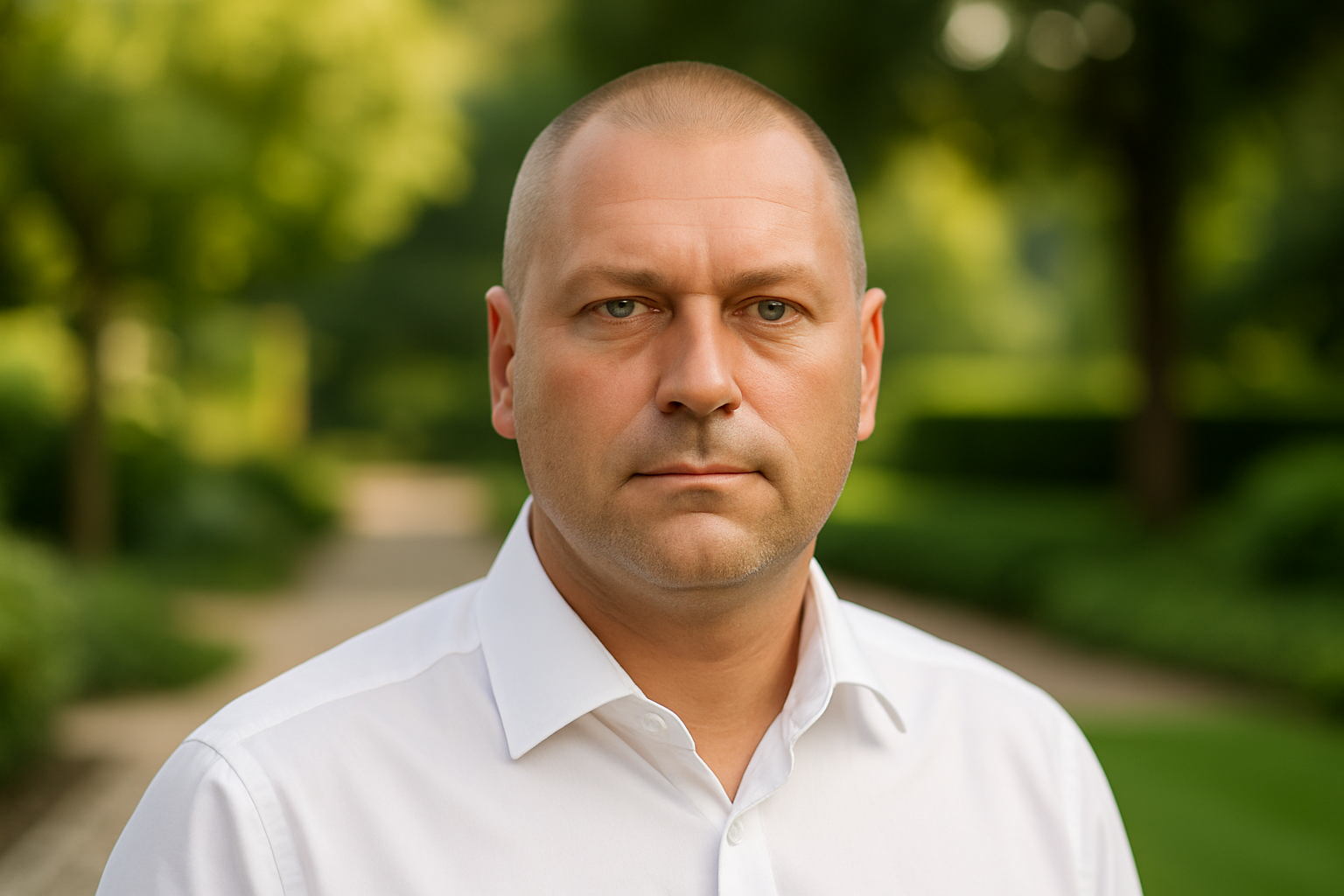
Why I Founded Angelus
I have been involved in humanitarian and volunteer work since 2004, when I took part in my first mission in northern Uganda. In the years that followed, I gained experience in Kosovo, Serbia, Vietnam, Indonesia, the Philippines, and other parts of the world. I worked in healthcare and in environments where I was able to witness poverty, lack of opportunity, and the everyday reality of people whose lives are very different from the world most of us know.
Over those years, I saw a great deal of good. I met people who were willing to help others without expecting anything in return. But I also saw another side of humanitarian assistance.
Good intentions do not automatically create good solutions.
Assistance can be too slow, too far removed from reality, or focused on treating the consequences of a problem without changing its cause.
That is why, after years of experience, I decided to establish Angelus – Cahaya Anak and take personal responsibility for the principles behind the way we work. I did not want to create another organization that merely talks about what should change. I wanted to build an organization willing to speak openly about problems, search for practical solutions, and change even its own assumptions whenever reality shows us a better path.
At Angelus, we begin with reality — not with our assumptions about it.
Angelus is built on a very simple belief:
If we want to create a better world for ourselves, we must begin with those who cannot yet help themselves — children.
We can build wealth, technology, and prosperous societies. But none of these exist in isolation. The world we will live in twenty or thirty years from now will be shaped by the children growing up today.
And millions of them are beginning their lives without one of the most fundamental opportunities of all — education.
Approximately 273 million children and young people remain out of school. Behind that number is not a single problem. There is poverty, geographic isolation, inadequate infrastructure, conflict, families struggling for everyday survival, and many other circumstances that none of these children chose.
A child without access to education will one day become an adult. If we do not give that child the opportunity to develop basic literacy, knowledge, and the skills needed for an independent life, we cannot be surprised when the same poverty is passed on to the next generation.
And this is the cycle we want to help break.
Why EduAI by Angelus Was Created
This is why EduAI by Angelus was created.
Not as a technology experiment, and not because artificial intelligence happens to be popular today. It grew from one very specific question:
How can we bring quality education to a child even where conventional educational infrastructure is insufficient — or does not exist at all?
EduAI was not born behind a desk. It was born from the reality of the field.
We do not want to spend more years simply discussing this question and writing reports about it. We want to build a solution, bring it into the real world, listen to children, families, teachers, and local communities, understand what works and what does not, and continue building according to what reality teaches us.
We Do Not Come to Dictate. We Come to Work Together.
Angelus does not intend to remain an organization working in only one country. Our ambition is to work gradually wherever we can be useful and wherever local conditions allow us to operate responsibly, safely, and in cooperation with the people for whom our projects are created.
But to me, this does not mean sending teams from Europe into different parts of the world and telling local people how they should solve their problems.
Quite the opposite.
Wherever Angelus works, we want our teams to be built primarily from local people — people who know their language, their culture, their communities, their education system, and the everyday reality of children far better than anyone arriving from outside ever could.
The role of Angelus is not to bring a finished European model into another country and expect local people to adapt to it. Our responsibility is to understand the local reality and adapt our solutions to it.
The same principle applies to me as the founder.
When I arrive in a new country, I do not arrive believing that I already know the answers. I come to listen and learn — from local communities, teachers, professionals, parents, and the people who live that reality every day.
When It Comes to Children, Expertise Comes Before Position
In work involving children, there is another boundary that I consider fundamental.
The position of the founder must never be more important than the needs of the child.
When decisions concern the safety, protection, or social needs of an individual child, the decisive professional role must belong to a qualified professional who knows the child, understands the local environment, and is familiar with the conditions in which that child lives.
Being the founder of an organization does not automatically give someone greater expertise than the professional whose responsibility is to protect the best interests of the child.
To me, this is part of responsible humanitarian work.
Angelus should never enter a country in order to reshape it in our image. We should arrive to understand it, and together with local people build solutions that belong first and foremost to them.
I do not believe that one organization can solve every problem in the world.
But I refuse to accept the idea that a problem is too large for us to even begin.
Angelus - Cahaya Anak